Introduction
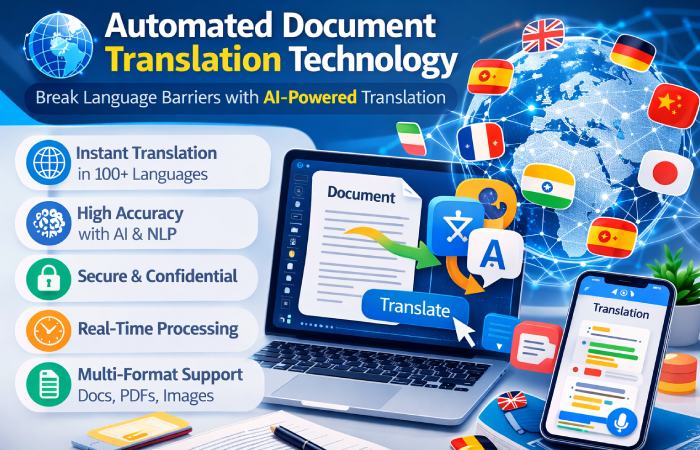
Global businesses increasingly operate across multiple languages and regions. “Automated document translation” refers to the use of artificial intelligence and machine learning tools to translate written documents instantly between languages. These systems use neural machine translation models to understand context and deliver accurate translations.
Major technology companies like Google, Microsoft, and Amazon provide advanced translation services through their AI platforms. Automated translation tools help organizations translate contracts, reports, manuals, and marketing documents quickly and cost-effectively.
What Is Automated Document Translation?
| Feature |
Description |
| Technology |
AI and Neural Machine Translation |
| Purpose |
Translate documents automatically |
| Supported Formats |
PDF, Word, Excel, Text |
| Languages Supported |
100+ languages |
| Main Users |
Businesses, government, researchers |
Key Technologies Used
| Technology |
Role |
| Neural Machine Translation |
Context-based translation |
| Natural Language Processing |
Language understanding |
| Optical Character Recognition |
Extracts text from scanned documents |
| Deep Learning |
Improves translation accuracy |
AI Translation Solutions
| Solution Type |
Example Use |
| Business document translation |
Contracts and legal documents |
| Website translation |
Multilingual websites |
| Customer communication |
Emails and support messages |
| Technical manuals |
Product documentation |
Popular Translation Tools
| Tool |
Provider |
Languages Supported |
| Google Translate |
Google |
130+ |
| Microsoft Translator |
Microsoft |
100+ |
| Amazon Translate |
Amazon |
75+ |
| DeepL Translator |
DeepL |
30+ |
| SYSTRAN Translate |
SYSTRAN |
50+ |
Global Locations Using Automated Translation
| Location |
Use Case |
| USA |
Business communication |
| Europe |
Multilingual government services |
| India |
IT and outsourcing |
| Japan |
Technical documentation |
| Canada |
Government translation systems |
Translation Software Packages
| Software Package |
Target Users |
Cost Range |
| Free Tools |
Individuals |
Free |
| Professional Tools |
Freelancers |
$10–$50/month |
| Enterprise AI Translation |
Corporations |
$500+/month |
Jobs Related to Automated Translation
| Job Role |
Responsibility |
| Localization Specialist |
Adapts content to languages |
| AI Language Engineer |
Develops translation models |
| Technical Translator |
Reviews translated content |
| Language Data Analyst |
Improves translation datasets |
Salary Comparison
| Role |
Average Salary |
| Localization Specialist |
$55,000 |
| AI Language Engineer |
$100,000 |
| Technical Translator |
$65,000 |
| NLP Engineer |
$120,000 |
Required Qualifications
| Qualification |
Purpose |
| Linguistics Degree |
Language expertise |
| Computer Science Degree |
AI model development |
| NLP Certification |
Natural language processing |
| Translation Certification |
Professional translation skills |
Websites Offering Automated Translation
Pros and Cons
| Pros |
Cons |
| Fast translation |
Context errors possible |
| Cost-effective |
Limited cultural nuance |
| Supports many languages |
Requires human review |
Alternatives to Automated Translation
| Alternative |
Description |
| Human translators |
Professional translation |
| Localization agencies |
Cultural adaptation |
| Hybrid translation |
AI + human editing |
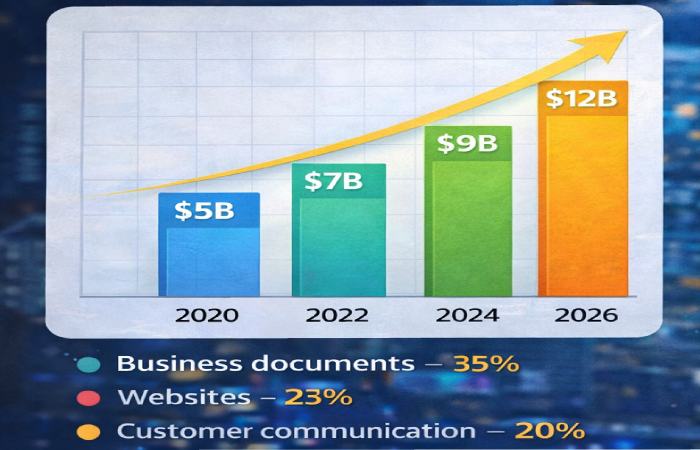
Growth of Automated Translation Market
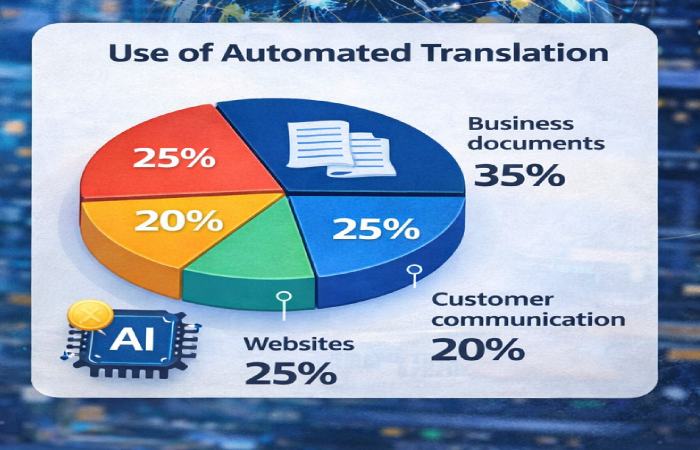
Use of Automated Translation
FAQs
What is automated document translation?
It is the use of artificial intelligence tools to translate documents automatically between languages.
Which companies provide AI translation tools?
Google, Microsoft, Amazon, and DeepL offer widely used translation platforms.
Is automated translation accurate?
Modern neural machine translation is highly accurate but may still require human review.
Can automated translation replace human translators?
It assists translators but does not fully replace human expertise.
Which industries use automated translation most?
Technology, e-commerce, government, and global businesses rely heavily on translation tools.
Conclusion
Automated document translation has revolutionized global communication by enabling organizations to translate large volumes of text instantly. AI-powered translation tools help businesses operate across multiple languages while reducing translation costs and time. As machine learning models continue improving, automated translation will become even more accurate and widely adopted in global business environments.