
Online trading in India is easy to begin but difficult to maintain from a statistical point of view, and new traders succeed only when they learn about structure, cost, regulation, and risk before attempting to make money.
Online trading in India has never been easier. You can open an account in a day and make your first trade from your mobile phone.
However, ease of access leads to a very dangerous misconception: that trading is easy.
Direct answer: Yes, online trading in India is legal, regulated, and highly advanced. But making money has much more to do with risk and cost management than with choosing the “right” stock.
Let’s break this down properly.
Table of Contents
What Online Trading in India Actually Means
When you place a trade, multiple institutions are involved:
-
Broker (your trading platform)
-
Exchange – National Stock Exchange (NSE) or Bombay Stock Exchange (BSE)
-
Regulator – Securities and Exchange Board of India (SEBI)
-
Depositories – National Securities Depository Limited (NSDL) or Central Depository Services Limited (CDSL)
India operates on a T+1 settlement cycle. That means trades settle one business day after execution.
Why this matters:
Your shares are not “held by the app.” They are held in demat form with regulated depositories. The infrastructure is strong. The risk lies in market exposure—not custody failure.
Types of Online Trading in India
| Type of Trading | Holding Period | Leverage | Capital Requirement | Risk Level | Skill Requirement | Time Commitment | Best Suited For |
|---|---|---|---|---|---|---|---|
| Equity Delivery (Investing) | Days to Years | None (unless pledged) | Moderate | Medium | Moderate | Low–Moderate | Beginners building long-term wealth |
| Intraday Trading | Same day | High (margin provided) | Low–Moderate | High | High | High (active monitoring) | Active traders with strict discipline |
| Futures Trading | Contract-based (weekly/monthly expiry) | Very High | Moderate | Very High | Very High | High | Experienced traders with risk models |
| Options Buying | Until expiry | Limited risk (premium paid) | Low–Moderate | High (time decay risk) | High | Moderate–High | Traders understanding volatility |
| Options Selling | Until expiry | High margin required | High | Very High (unlimited loss risk) | Very High | High | Advanced traders only |
| Commodity Trading | Intraday to positional | High | Moderate | High | High | Moderate–High | Traders tracking global macro trends |
| Currency Trading | Intraday to short-term | Moderate–High | Moderate | Medium–High | High | Moderate | Traders focused on macro & RBI policy |
Qualitative Risk Comparison Table
| Segment | Capital Needed | Leverage | Skill Demand | Risk Intensity |
|---|---|---|---|---|
| Equity Delivery | Moderate | Low | Moderate | Medium |
| Intraday | Low–Moderate | High | High | High |
| F&O | Moderate | Very High | Very High | Very High |
| Commodities | Moderate | High | High | High |
The Real Cost of Online Trading
Most blogs stop at brokerage.
Real cost includes:
-
Brokerage
-
STT (Securities Transaction Tax)
-
Exchange transaction charges
-
SEBI turnover fees
-
GST
-
Stamp duty
-
DP charges (for delivery sell)
Regulation & Structural Changes
Recent developments:
-
Peak margin norms introduced by SEBI
-
T+1 settlement implementation
-
Increased F&O risk disclosures
India is comparatively stricter on retail leverage than many global markets.
That protects systemic stability—but limits reckless exposure.
Why Most Retail Traders Lose
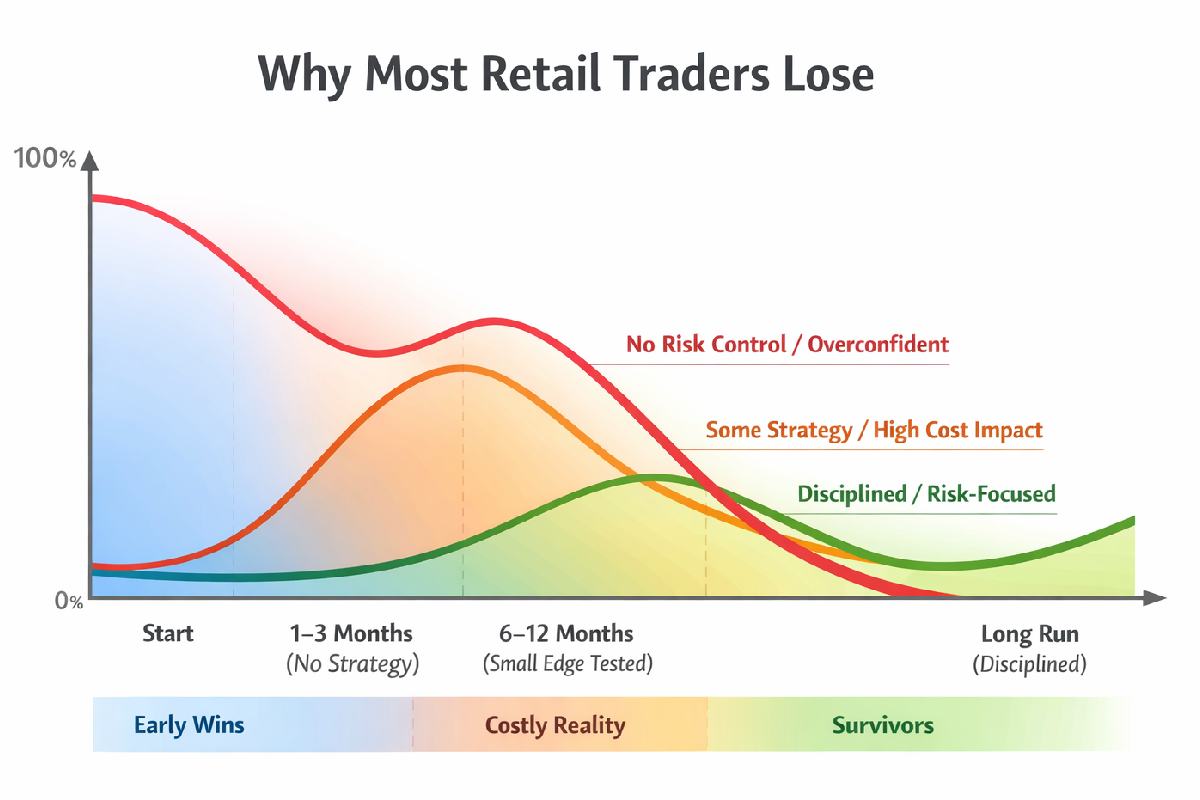
Research in behavioral finance (including work by Daniel Kahneman and brokerage performance studies) shows recurring patterns:
-
Overconfidence bias
-
Loss aversion
-
Excessive trading
-
Poor risk-reward planning
For instance:
Trader A:
-
70% win rate
-
Small profits
-
Occasional large loss
Trader B:
-
45% win rate
-
Larger average profit
-
Controlled losses
Trader B can be more profitable despite lower win rate.
Win rate is not edge. Expectancy is edge.
Investing vs Trading
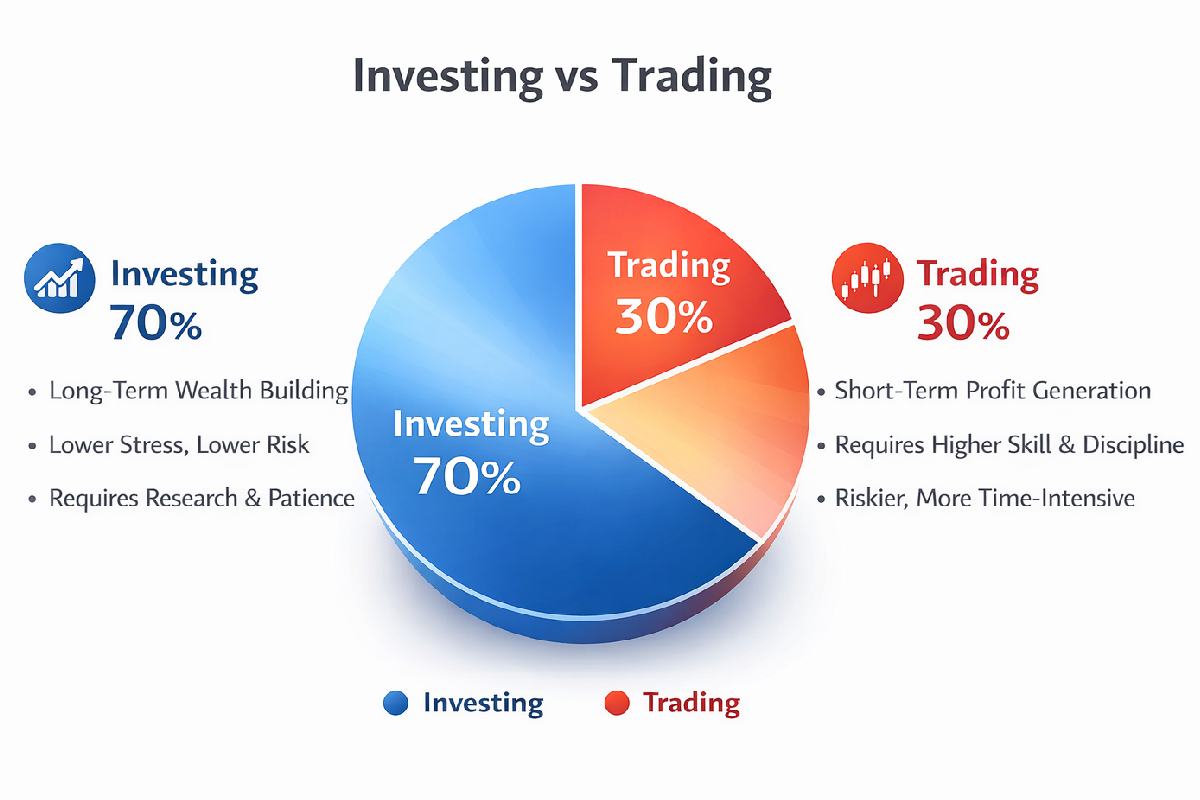
Choose investing if:
-
You have limited time.
-
You prefer steady compounding.
-
You are building long-term wealth.
Consider trading only if:
-
You understand volatility deeply.
-
You track performance metrics.
-
You accept frequent losses as part of the process.
Beginner Survival Framework
1. Phase 1 – Education (30–60 days)
-
Learn position sizing.
-
Understand drawdowns.
-
Study exchange circulars.
2. Phase 2 – Controlled Exposure
-
Small capital.
-
Strict 1–2% risk per trade.
-
Avoid F&O initially.
3. Phase 3 – Performance Review
Track:
-
Win rate
-
Average win vs average loss
-
Maximum drawdown
-
Emotional triggers
Frequently Asked Questions
Is online trading legal in India?
Yes. It is regulated by SEBI and executed on recognized exchanges like NSE and BSE.
How much money do I need to start?
You can start small, but sustainability requires risk control—not just low capital.
Can you make a living from trading?
Possible, but statistically difficult. It requires professional-level discipline.
Are trading apps safe?
Registered brokers operate within a regulated framework. Market risk remains your responsibility.
Final Reality Check
Online trading in India is technologically advanced and structurally secure.
But structure does not guarantee profit.
Beginners who:
-
Prioritize risk management
-
Respect leverage
-
Control costs
-
Think in probabilities
Have a chance.
Everyone else becomes short-term liquidity for the market.