
Corporate finance is the backbone of every successful business. Whether it’s a startup raising funds, a multinational expanding globally, or a company managing risk, corporate finance helps organizations make smart financial decisions.
From companies like Apple Inc. investing in innovation to financial institutions like Goldman Sachs advising on billion-dollar mergers, corporate finance plays a central role in shaping the global economy.
In this guide, you’ll learn everything about corporate finance—its meaning, types, how it works, career opportunities, salaries, and courses.
Table of Contents
What Is Corporate Finance?
Corporate finance is the branch of finance that deals with how companies manage their money, raise capital, invest in projects, and maximize shareholder value.
In simple words, corporate finance answers three major questions:
How should a company invest its money?
How should it raise funds?
How should it manage profits and risks?
The ultimate goal is maximizing shareholder wealth while maintaining financial stability.
Core Components of Corporate Finance
| Component | Description | Example |
| Capital Budgeting | Deciding which long-term investments to pursue | Opening a new manufacturing plant |
| Capital Structure | Deciding the mix of debt and equity financing | Issuing shares vs. taking a bank loan |
| Working Capital Management | Managing short-term assets and liabilities | Managing inventory and cash flow |
| Dividend Policy | Deciding how much profit to distribute | Paying dividends to shareholders |
| Risk Management | Managing financial risks | Hedging against currency fluctuations |
How Corporate Finance Works
Corporate finance works through a structured decision-making process:
- Financial Planning—Forecasting revenue, expenses, and capital needs.
- Investment Analysis – Evaluating projects using tools like NPV (Net Present Value) and IRR (Internal Rate of Return).
- Funding Decisions—Choosing between equity, debt, or hybrid financing.
- Execution & Monitoring—Implementing financial strategies and tracking performance.
- Performance Optimization—Improving profitability and reducing financial risk.
Large firms like JPMorgan Chase and Morgan Stanley assist corporations in structuring major financial transactions.
Types of Corporate Finance
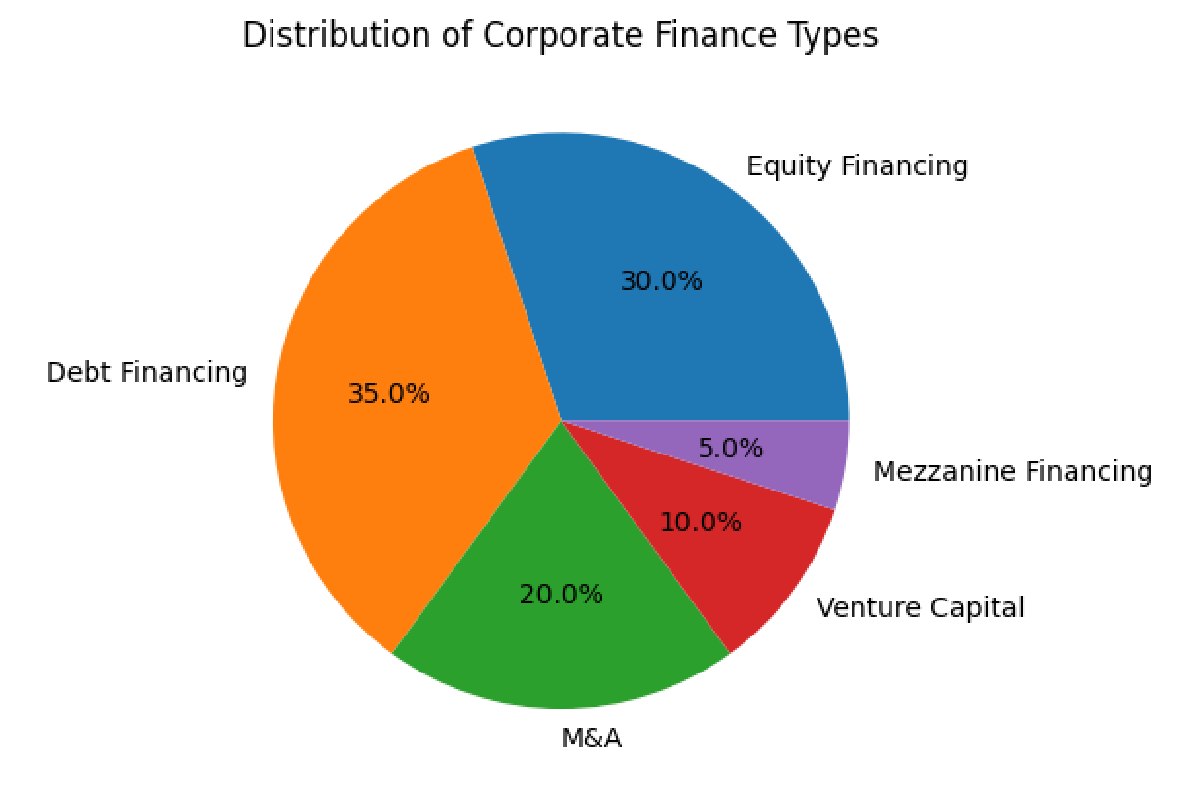
| Type | Description | Purpose |
| Equity Financing | Raising capital by selling shares | Business expansion |
| Debt Financing | Borrowing money via loans or bonds | Funding operations |
| Mezzanine Financing | Hybrid of debt and equity | Growth capital |
| Venture Capital | Funding startups | Innovation support |
| Mergers & Acquisitions (M&A) | Buying or merging companies | Market expansion |
Corporate Finance Companies Globally
| Company | Headquarters | Specialization |
| Goldman Sachs | New York, USA | Investment Banking |
| Morgan Stanley | New York, USA | Wealth & Asset Management |
| JPMorgan Chase | New York, USA | Corporate Banking |
| Barclays | London, UK | Investment & Corporate Banking |
| HSBC | London, UK | Global Corporate Finance |
Corporate Finance Jobs
| Job Role | Key Responsibilities | Experience Level |
| Financial Analyst | Financial modeling & analysis | Entry-Level |
| Corporate Finance Executive | Budgeting & reporting | Mid-Level |
| Investment Banking Analyst | Deal structuring | Entry-Level |
| Finance Manager | Financial planning & control | Mid-Senior |
| Chief Financial Officer (CFO) | Strategic financial leadership | Senior-Level |
Corporate Finance Salaries
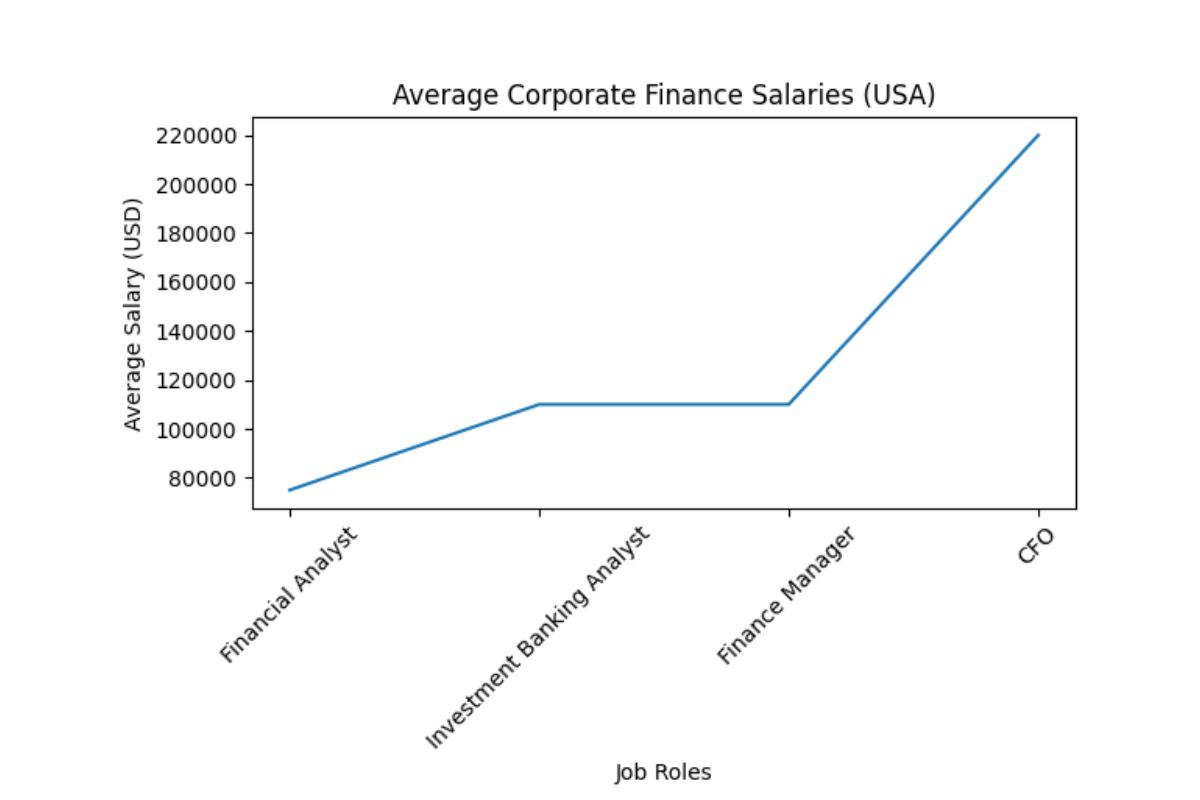
(Approximate annual salaries—may vary by country)
| Job Role | USA (USD) | India (INR) |
| Financial Analyst | $65,000–$85,000 | ₹5–₹10 LPA |
| Investment Banking Analyst | $100,000+ | ₹10–₹25 LPA |
| Finance Manager | $90,000–$130,000 | ₹12–₹30 LPA |
| CFO | $200,000+ | ₹35 LPA – ₹1 Cr+ |
Corporate Finance Courses
Here are popular courses and certifications:
- Chartered Financial Analyst (CFA) – Offered by CFA Institute
- MBA in Finance – Offered by top institutions like Harvard Business School
- Financial Modeling & Valuation Courses
- ACCA (Association of Chartered Certified Accountants)
- Certified Management Accountant (CMA)
- Online corporate finance courses on platforms like Coursera
Corporate Finance vs. Other Fields
| Field | Focus Area | Key Difference |
| Corporate Finance | Company financial decisions | Internal company management |
| Investment Banking | Advisory & deal-making | External financial services |
| Accounting | Recording transactions | Historical financial reporting |
| Financial Planning | Personal finance management | Individual wealth focus |
| Public Finance | Government finance | Policy & taxation focus |
Conclusion
Corporate finance is essential for business growth, sustainability, and profitability. It guides investment decisions, funding strategies, and risk management. With strong career prospects, competitive salaries, and global opportunities, corporate finance remains one of the most powerful and rewarding fields in finance.
Short FAQs
1. What is the main goal of corporate finance?
A. To maximize shareholder value while managing financial risk.
2. Is corporate finance a good career?
A. Yes, it offers high salaries, global exposure, and strong growth opportunities.
3. What skills are required for corporate finance?
A. Financial modeling, analytical thinking, Excel proficiency, and strategic decision-making.
4. What degree is best for corporate finance?
A. B. Com, BBA, MBA (Finance), or CFA certification is highly recommended.
5. What is the difference between corporate finance and investment banking?
A. Corporate finance focuses on managing a company’s finances internally, while investment banking provides advisory services to companies.
