
A content writing business is no longer about selling words—it’s about building a strategic, outcome-driven growth engine powered by positioning, systems, and smart use of AI.
Most people who search for “content writing business” want to know how to start one. The straightforward answer: you begin by choosing a beneficial positioning, confirming demand, and structuring your service area around outcomes—not per-word labor. That shift controls whether you build a scalable business or a scalable job.
Table of Contents
The Problem
Too many beginners enter the market as generic freelance writers. They compete on price, chase clients, and feel threatened by AI tools that can produce drafts instantly.
The Agitation
When your offer is “I write blog posts,” you are:
- Easily replaceable.
- Constantly negotiating on price.
- Stuck trading time for money.
- Vulnerable to automation.
Income plateaus. Burnout increases.
The Solution
Treat your content writing business as a growth service, not a writing gig. Sell strategic impact, build systems early, and design your model around recurring revenue.
What Is a Content Writing Business?
A new generation content writing business distributes strategic content assets, which leads to a determinate outcome such as traffic, leads, authority, and revenue.
It is not simply selling words.
Labor Seller vs Outcome Partner
| Dimension | Labor Seller | Outcome Partner |
| Pricing | Per word | Per project / retainer |
| Focus | Word count | Business impact |
| Client type | Budget-sensitive | Growth-oriented |
| AI threat | High | Low |
| Scalability | Limited | Expandable |
Google’s Search Central guidance emphasizes helpful, experience-driven content. Thin, volume-based output increasingly struggles in search visibility. Businesses need strategic differentiation.
The 3 Core Business Models Explained
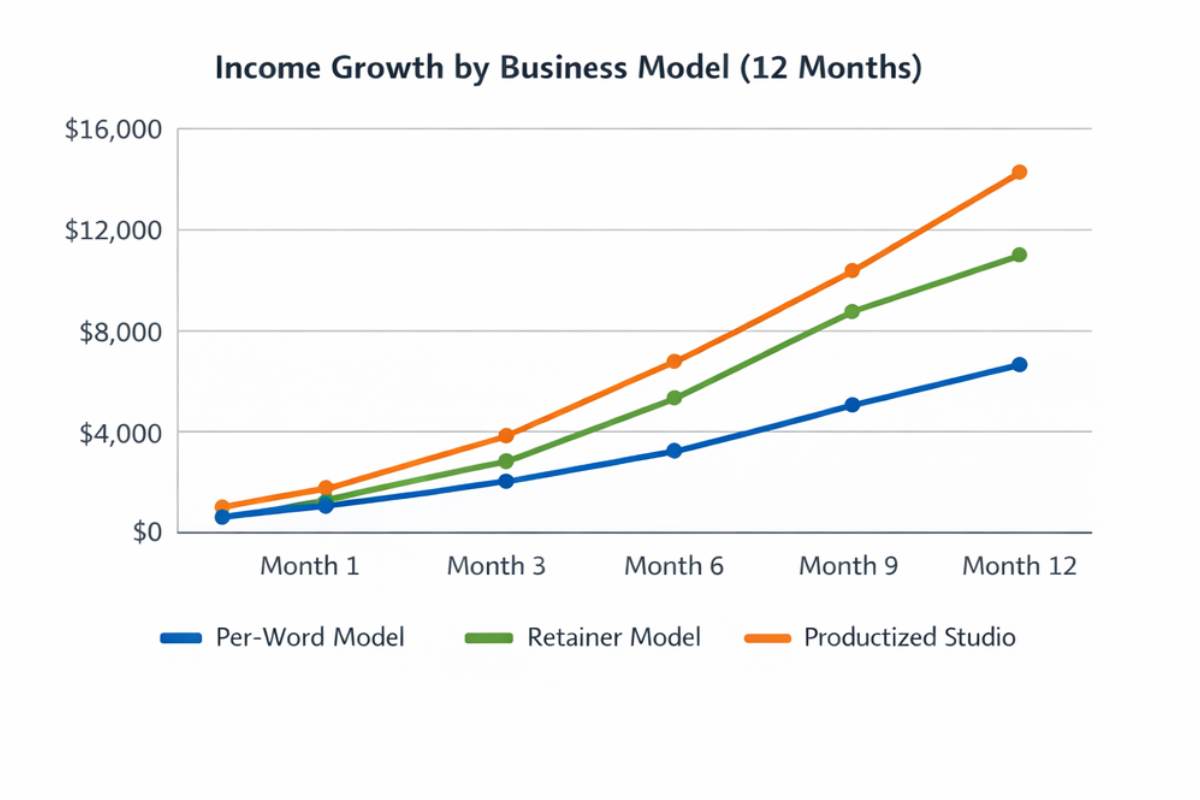
-
Solo Specialist Model
Best for: Lifestyle flexibility.
Pros:
- High control.
- Low overhead.
Cons:
- Income capped by hours.
- Limited leverage.
You can reach solid income, but scaling requires raising rates continuously.
-
Productized Content Studio
You offer defined packages:
- “SEO Authority Sprint”
- “4 Articles per Month”
- “Content Refresh Program”
Benefits:
- Clear scope.
- Predictable margins.
- Easier sales conversations.
-
Micro-Agency Model
You hire:
- Writers.
- Editors.
- Researchers.
You focus on:
- Strategy.
- Sales.
- Quality control.
Higher ceiling, but operational risk increases.
12-Month Roadmap
Phase 1 (0–3 Months)
- Build strategic portfolio.
- Validate niche.
- Secure first clients.
Phase 2 (3–9 Months)
- Shift to retainers.
- Strengthen positioning.
- Publish authority content.
Phase 3 (9–12 Months)
- Productize services.
- Build SOPs.
- Explore hiring support.
Model Comparison
| Factor | Solo | Productized | Micro-Agency |
| Revenue ceiling | Medium | High | Very High |
| Complexity | Low | Medium | High |
| Risk | Low | Medium | High |
| Leverage | Limited | Structured | Team-based |
Client Acquisition That Signals Authority
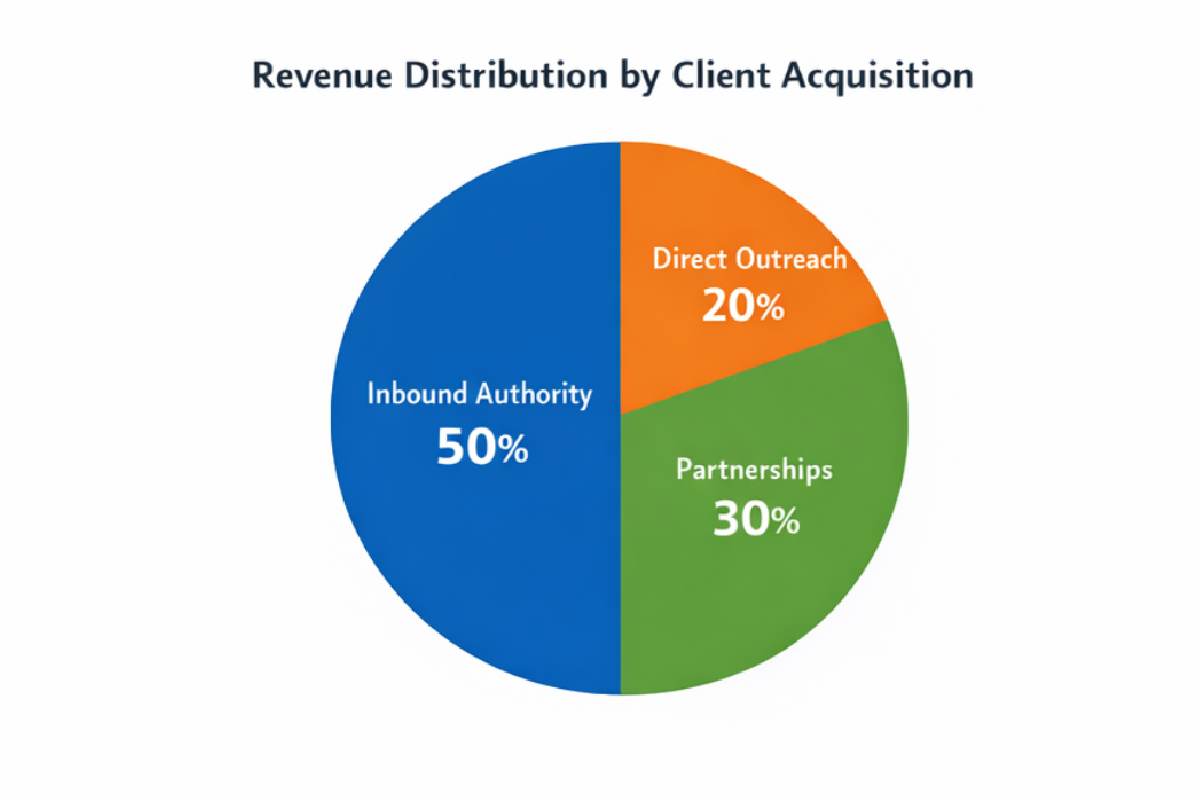
Strategy-Based Outreach
Send:
- Mini content audit.
- Ranking gap observation.
- 3 specific improvement suggestions.
You demonstrate thinking, not availability.
Authority Publishing
Share:
- SEO breakdowns.
- Conversion analyses.
- Tactical insights.
Inbound leads convert better than cold mass pitching.
Partnerships
Collaborate with:
- SEO agencies.
- Web design firms.
- Paid media consultants.
Common Failure Patterns
- Undervaluing services.
- No specialization.
- Platform dependency.
- Scaling without SOPs.
Positioning Framework for the AI Era
AI can generate drafts. It cannot build strategic authority.
According to trends reported by Content Marketing Institute and HubSpot’s State of Marketing, marketers prioritize quality, ROI tracking, and strategy alignment over content volume.
Use this formula:
I help [specific audience] achieve [specific measurable outcome] using [specific content approach].
Checklist for strong positioning:
- Clear industry.
- Clear outcome.
- Clear mechanism.
- Clear differentiation.
Weak: “I write SEO blog posts.”
Strong: “I help fintech startups grow qualified demo bookings through conversion-driven SEO content.”
Pricing Models That Protect Profit
Per-Word Pricing
Problem:
- Anchors your value to length.
- Encourages clients to reduce scope.
- Caps income.
Project-Based Pricing
Benefits:
- Rewards complexity.
- Easier scope control.
- Aligns expectations.
Retainers & Value-Based
Retainers create stability.
Systems: The Hidden Multiplier
Without systems, scale collapses.
Essential systems:
- Discovery call framework.
- Onboarding checklist.
- Content brief template.
- Editing rubric.
- AI usage policy.
Example Content Brief Structure:
- Target keyword.
- Intent analysis.
- SERP gap review.
- Outline.
- CTA plan.
- Internal link plan.
Who This Model Is Not For
- Those seeking quick cash gigs.
- Writers who avoid analytics.
- People unwilling to specialize.
Final Perspective
The content writing industry is not disappearing. It is bifurcating.
On one side: low-cost commodity writing.
On the other: strategic growth partners who understand search, psychology, systems, and business impact.
Build toward the second category—and your content writing business becomes durable, scalable, and defensible.