
Social media marketing is not a posting activity—it is a performance system where attention engineering, trust building, and conversion architecture determine results.
Most businesses approach social media as a content calendar problem. Post more. Follow trends. Use hashtags. Hope for reach.
Here’s the direct answer: social media marketing works when it is treated as a structured business system, not a content hobby. If you connect attention to trust, and trust to conversion—while building owned assets—you create predictable growth.
Table of Contents
What Social Media Marketing Really Means in 2026
Social media marketing is the deliberate use of platforms to attain attention, to build trustworthiness, and to drive assessable business results.
According to repeated digital reports from organizations like McKinsey and HubSpot, brands that take part in content, paid collaboration, and owned channels are those that rely on isolated strategies.
But here’s an upgrade:
Social media marketing is a structure that shifts people through stages—not a river of random posts.
The Attention → Trust → Conversion → Ownership Framework
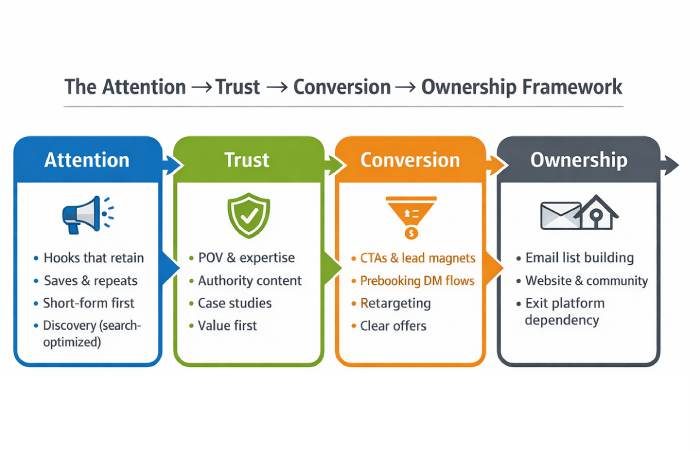
Stage 1 – Attention (Algorithm Mechanics)
Platforms like Instagram, TikTok, LinkedIn, and YouTube reward:
- Watch time
- Retention
- Saves and shares
- Repeat engagement
They do not reward effort. They reward outcomes.
Comparison: Posting Volume vs Retention Strategy
| Approach | Focus | Likely Outcome |
| High-volume posting | Quantity | Burnout + inconsistent reach |
| Retention-first | Hook strength + depth | Algorithm amplification |
If 70% of viewers drop in 3 seconds, your problem isn’t frequency. It’s messaging.
Stage 2 – Trust (Depth Over Virality)
Viral content can introduce you. It rarely convinces someone to buy.
Trust is built through:
- Specific examples
- Case breakdowns
- Clear positioning
- Honest trade-offs
Stage 3 – Conversion (Architecture, Not Hope)
Attention does not automatically convert.
You need:
- Clear CTAs
- Lead magnets
- DM flows
- Booking systems
- Retargeting logic
Stage 4 – Ownership (Rented vs Owned)
You do not own:
- Followers
- Reach
- Algorithm stability
You do own:
- Email lists
- Website traffic
- Community spaces
If social media is your only channel, you are building on rented land.
Choosing the Right Platform
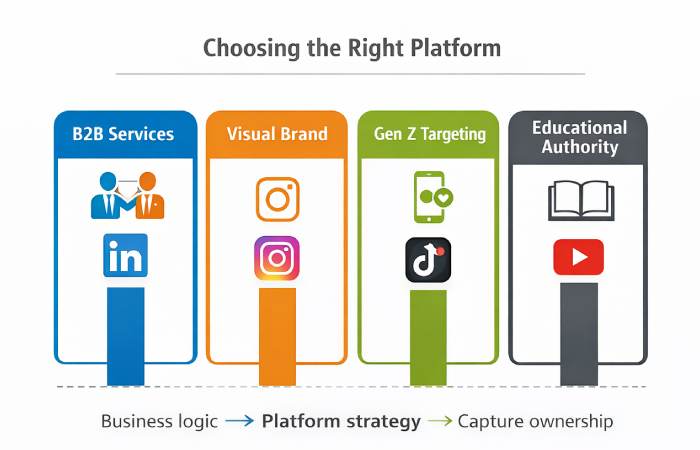
Stop asking, “Which platform is best?”
Ask, “Where does my business model win?”
| Business Type | Best Fit | Why |
| B2B services | Decision-maker access | |
| Visual brand | Visual discovery | |
| Gen Z targeting | TikTok | Algorithmic reach |
| Educational authority | YouTube | Search longevity |
Platform choice should reflect buying behavior, not trend cycles.
Organic vs Paid Social Media Marketing
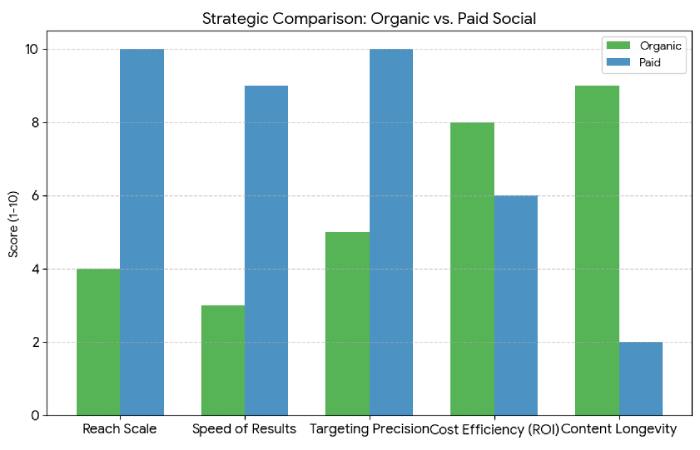
Organic = trust engine.
Paid = acceleration engine.
Advertising ecosystems like Meta and Google allow targeting and retargeting.
| Approach | Strength | Weakness |
| Organic | Credibility | Slow ramp |
| Paid | Fast scaling | Requires budget + tested messaging |
| Hybrid | Compounding growth | Needs strategy |
Best practice: test messaging organically, scale proven content with paid.
Metrics That Actually Matter
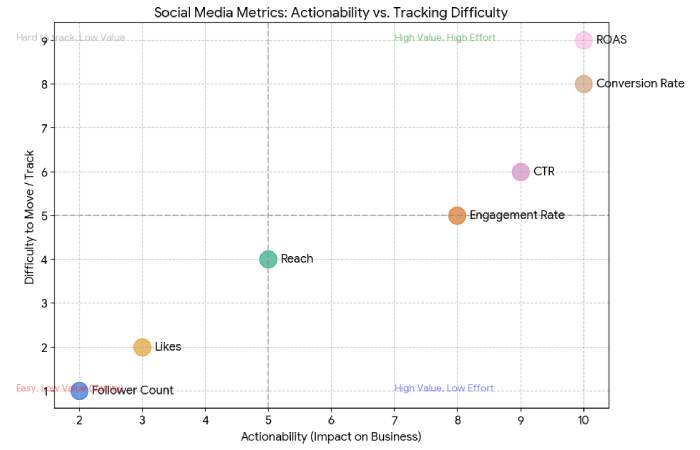
Leading Indicators
- Watch time
- Saves
- Profile visits
- Comments with depth
Lagging Indicators
- Leads
- Revenue
- Customer acquisition cost
- Lifetime value
Use tools like Google Analytics to connect traffic to outcomes.
Common Failure Patterns
- Posting without positioning
- Copying competitors
- Ignoring conversion systems
- Relying on one platform
- Expecting results in 30 days
Most failure is structural, not creative.
Frequently Asked Strategic Questions
- How long does it take to work?
Typically 3–6 months for organic traction; faster with paid if messaging is validated. - Is social media saturated?
Generic content is saturated. Specific expertise is not. - Can AI replace strategy?
AI can accelerate creation. It cannot replace positioning or judgment.
Final Perspective
Social media marketing is not about beating algorithms.
It’s about aligning attention, authority, and economics.
If you treat it as a performance system—where each post serves a strategic role—you create leverage.
If you treat it as content theater, you create noise.
