
Choosing the right e-commerce platform is not a feature decision—it’s a strategic business decision about control, cost structure, and scalability.
If you’re searching for “e-commerce platform,” you likely want to know: which one is best?
The direct answer is that there is no universally best platform—only the one that aligns with your business model and growth plans.
Table of Contents
What Is an E-Commerce Platform?
An e-commerce platform is the technical foundation that allows you to:
- Display products
- Process payments
- Manage orders
- Handle logistics integrations
- Track customer data
But strategically, it defines:
- Your operational flexibility
- Your cost structure
- Your ability to scale
The 3 Core Types of E-Commerce Platforms
-
Hosted Platforms
Examples: Shopify, Wix
Best for: Fast launches and small teams.
Advantages:
- Quick setup
- No server management
- Built-in security
Trade-offs:
- Monthly subscription fees
- App dependency
- Platform lock-in
- Limited backend control
-
Open-Source Platforms
Examples: WooCommerce, Magento
Best for: Businesses wanting flexibility and customization.
Advantages:
- Full control over code
- Custom feature development
- Hosting flexibility
Trade-offs:
- Technical responsibility
- Security management
- Maintenance costs
-
Enterprise Platforms
Examples: Shopware, Salesforce Commerce Cloud
Best for: High-volume, international operations.
Advantages:
- Advanced integrations
- High scalability
- Enterprise-grade performance
Trade-offs:
- High implementation cost
- Complex deployment
- Dedicated technical teams required
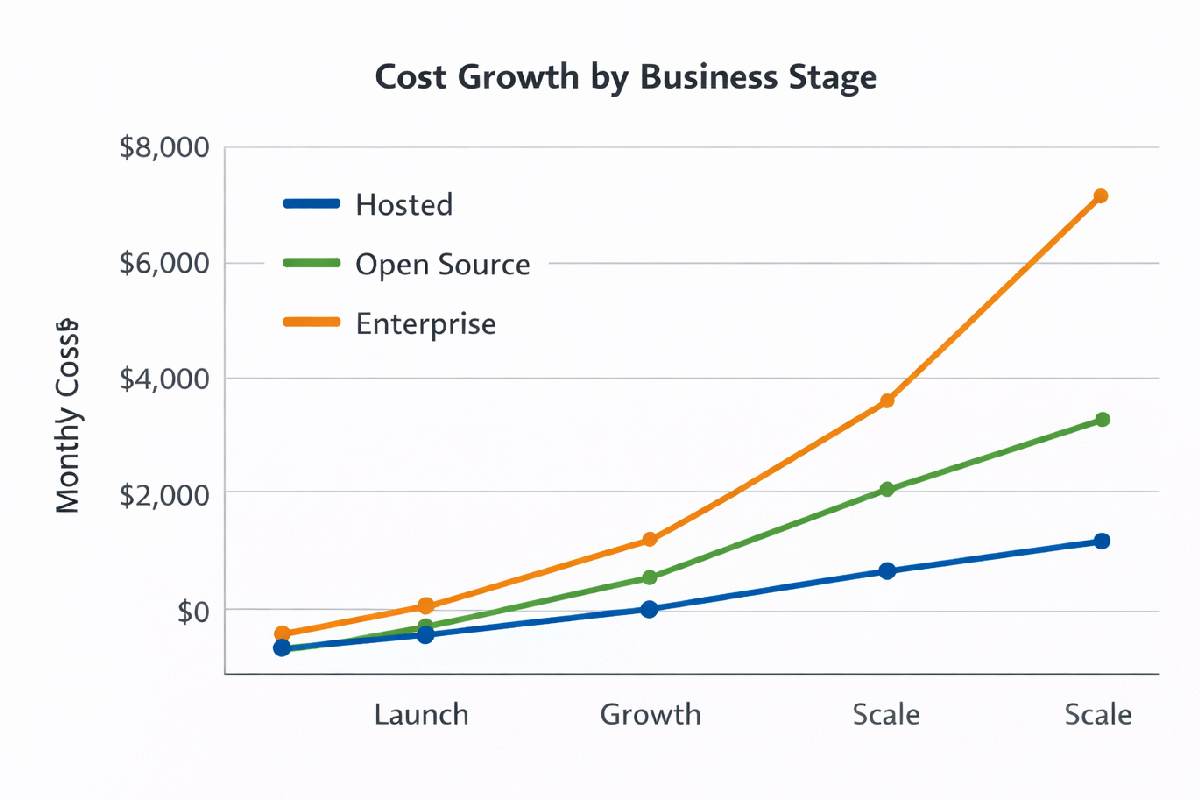
Cost Growth by Business Stage
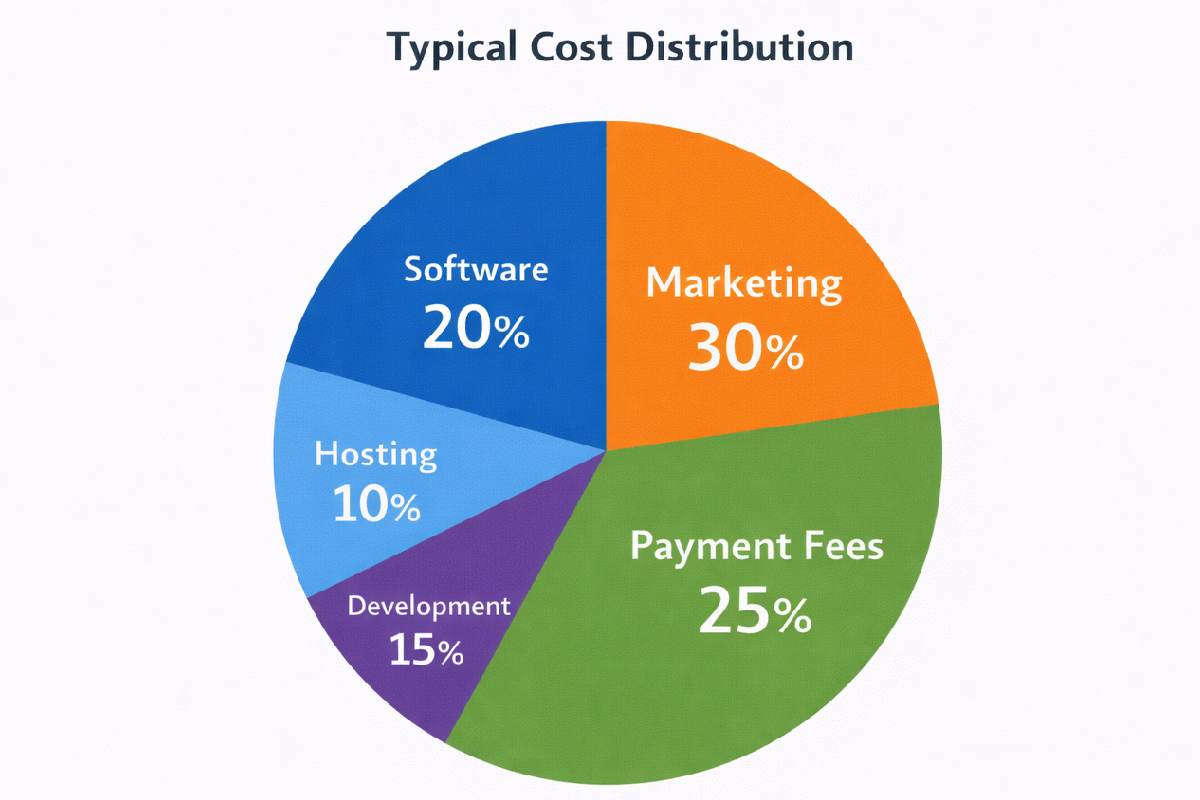
Typical Cost Distribution
The Problem
Most businesses choose a platform based on:
- Popularity
- Low starting price
- Influencer recommendations
- Ease of setup
The Agitation
Later, they face:
- Rising app/plugin costs
- Performance bottlenecks
- Limited customization
- Expensive migrations
- Compliance complications
The wrong choice doesn’t hurt immediately—it hurts when you start growing.
The Solution
Select your platform based on:
- Growth stage
- Required control
- Total Cost of Ownership (TCO)
- Long-term scalability
- Regulatory environment
Strategic Comparison
| Platform Type | Best For | Cost Structure | Scalability | Customization | Technical Skill Required | Long-Term Control | Risk Level |
|---|---|---|---|---|---|---|---|
| Hosted SaaS (e.g., Shopify, Wix) | Beginners, small businesses, fast launches | Monthly subscription + transaction fees | Moderate to High (depends on plan) | Limited to platform ecosystem | Low | Low–Medium (platform dependent) | Low |
| Open Source (e.g., WooCommerce, PrestaShop) | Growing brands needing flexibility | Hosting + plugins + dev costs | High (with proper hosting) | Very High | Medium | High | Medium |
| Enterprise/Headless (e.g., Magento, Salesforce Commerce Cloud) | Large brands, complex operations | License fees + dev + infrastructure | Very High | Full customization | High | Very High | High |
When Should You Migrate?
Consider migrating if:
- App fees are eroding margins
- Your platform restricts international expansion
- Performance declines under traffic spikes
- Custom features become impossible
Migration costs include:
- Data transfer
- SEO risk
- Development work
- Downtime
Avoid emergency migrations—plan transitions strategically.
Regulatory & Regional Considerations
For EU-based businesses:
- GDPR compliance
- VAT handling
- Data hosting location
US-based stores may be affected by some regulatory problems but must consider the tax rules of the state level.
Always evaluate platform compliance tools before choosing.
Final Perspective
The right e-commerce platform is not the one with the most features.
It’s the one aligned with your:
- Growth stage
- Technical capabilities
- Margin structure
- Strategic ambitions
Make the decision as a business operator—not as a software shopper—and your platform becomes a growth engine rather than a constraint.
